Deities
Enshrined at Bhairavi Dham
Everything enshrined at the dham — the three principal devis, the ten Mahavidyas around the temple, the Asht Bhairavi, Veer Ganesh, and Parameshthi Guru Mahesh in the form of the guru.
The Three Principal Devis of Bhairavidham
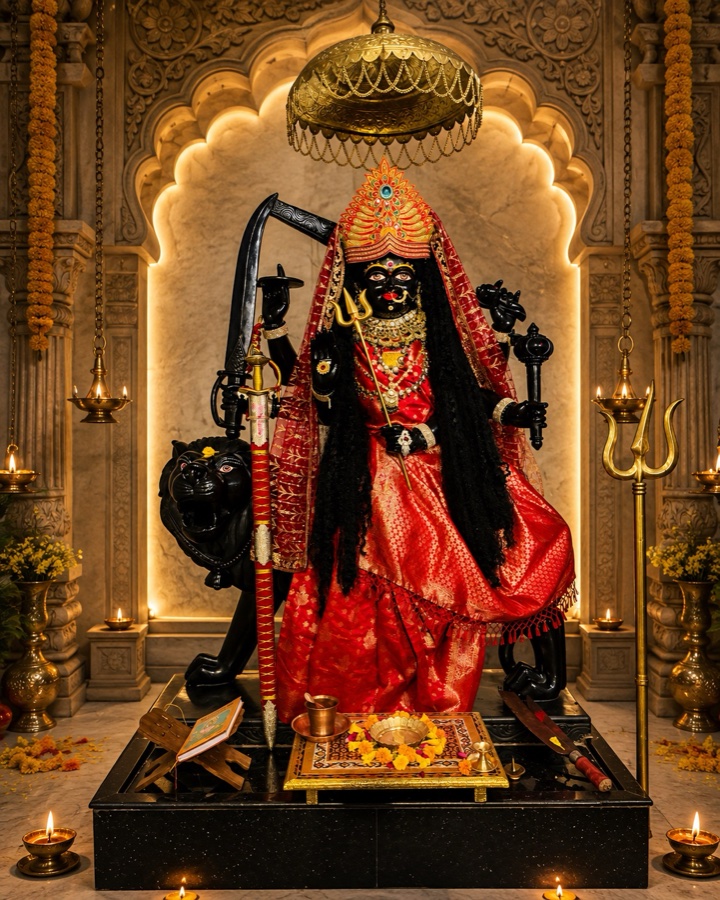
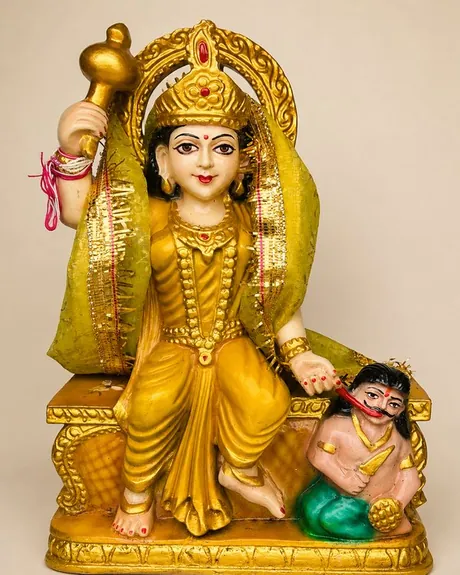
Maa Danteshwari
The dham's aradhya devi 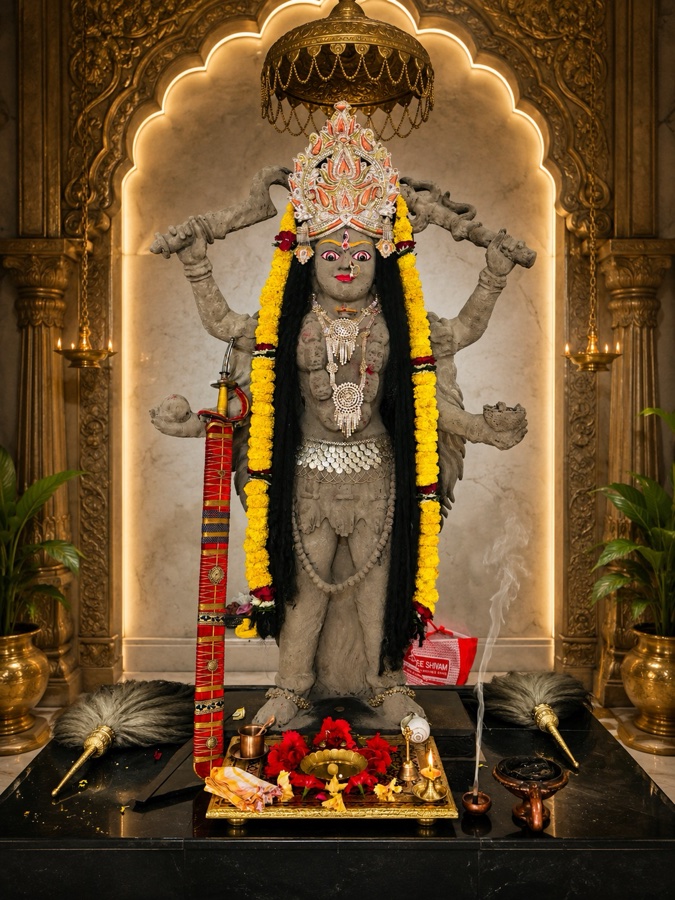
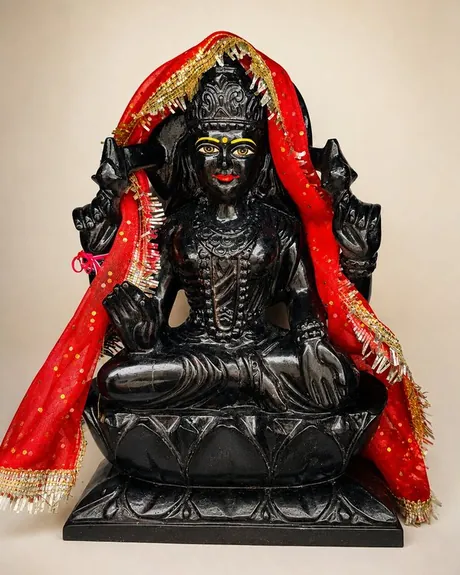
Maa Bhairavi
The dham's siddhidayini 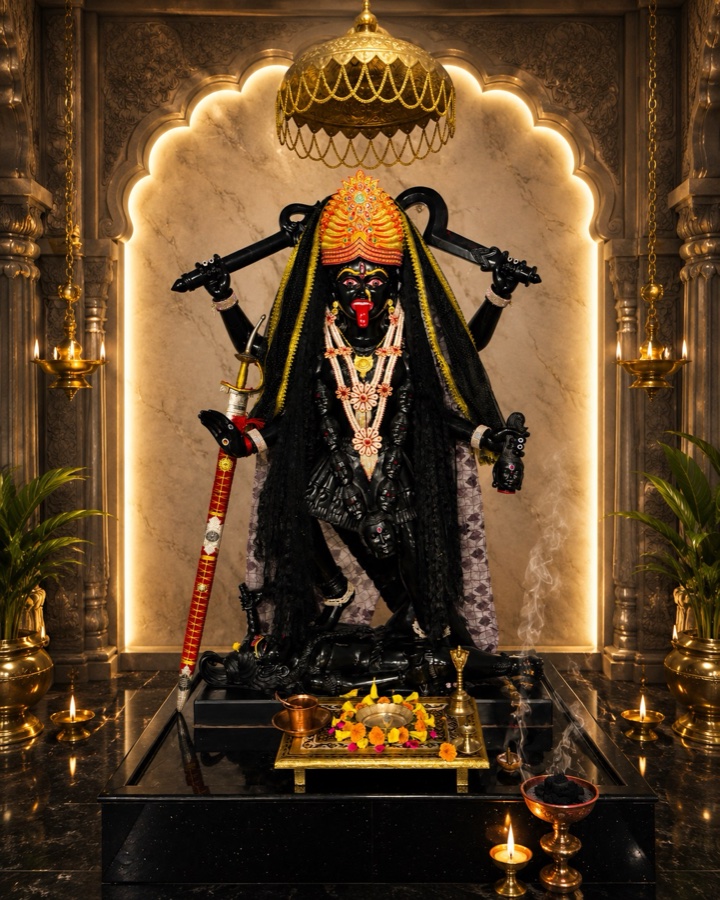
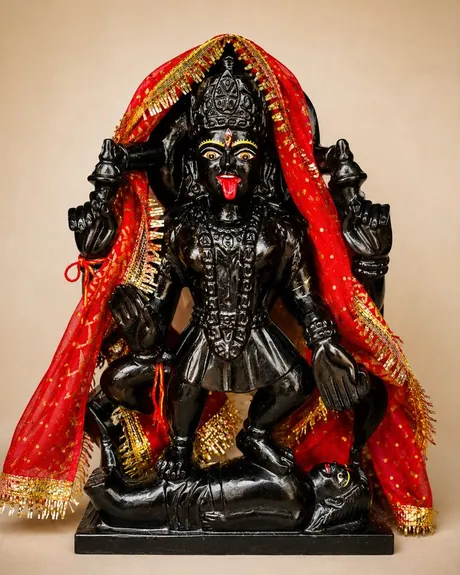
Maa Kali
The dham's kuldevi
Maa Danteshwari Maayi
Rajrajeshwari Maa Danteshwari Maayi, enshrined at Bhairavidham, is the aradhya devi of our Asalpath panth. For our panth she is the living centre of shakti, of protection, and of the sadhana parampara. Enshrined in the garbhagriha of the temple, Maa Danteshwari Maayi is worshipped in the form of our badi dai, and the place of all our other devis comes after hers. The presence of Maa Danteshwari Maayi holds a special and supreme place in the sadhana parampara of Bhairavidham.
Jai Maa Danteshwari Maayi.
Maa Bhairavi Maayi
Maa Bhairavi, the original form of all the shaktis, is the param shakti of Bhairavidham. In her profound, resplendent and divine form, smeared with bhasma, Maa Bhairavi is enshrined as the param shakti of the Asalpath panth and as the devi presiding at the root of its sadhana. She is the centre-point of all shakti, in whom the divine form of the energy and the consciousness of the universe is gathered. She is the one who grants shakti on the path of sadhana, and the guru of the gurus themselves — Adi Shakti Maa Bhairavi.
Jai Maa Bhairavi Maayi.
Maa Dakshineshwari Kali Maayi
Maa Dakshineshwari Kali Maayi is enshrined at Maa Bhairavi Dham in the form of the kuldevi of our Asalpath panth. She is the devi of our kul — the shakti who guards our kul and our vansh, who protects them, and who gives guidance on the path of life. By Maa's grace the parampara and the sanskar of the kul are kept safe, and the continuity of the vansh is maintained. By her blessing the kul carries its parampara and its sanskar forward, and the generations to come receive her protection and her guidance.
Jai Maa Dakshineshwari Kali Maayi.
Maa Bhairavi — the Root of All
Maa Bhairavi is the supreme shakti. The root of every power lies in her.
So there is no need to worship each shakti separately. Worshipping Maa Bhairavi alone is worship of every shakti.
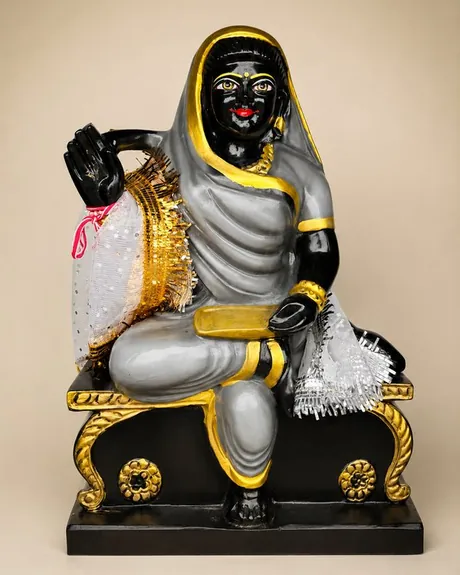
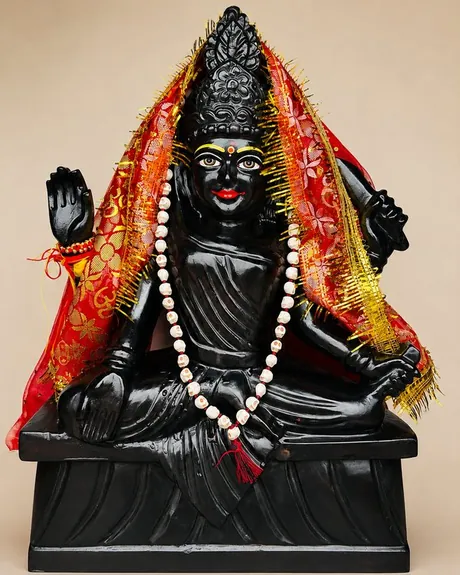
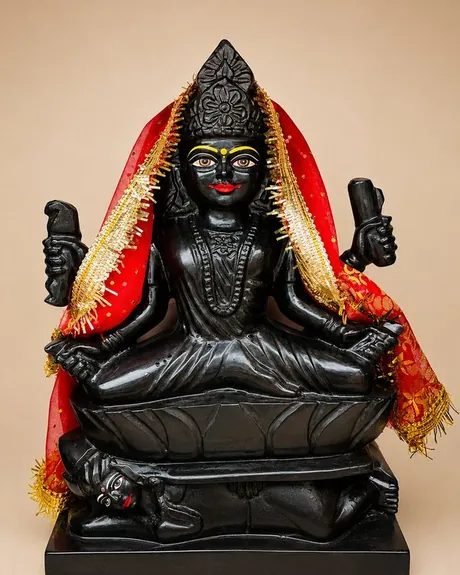
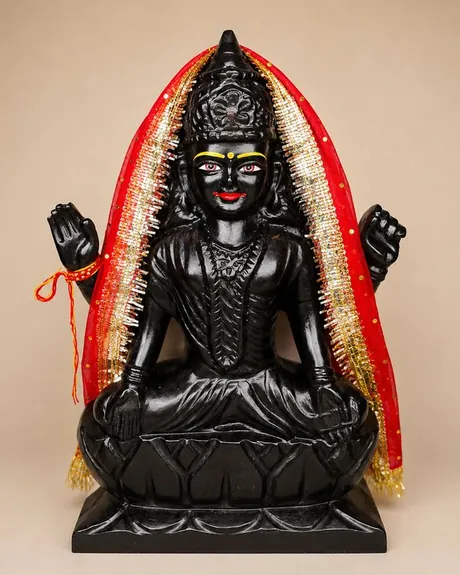
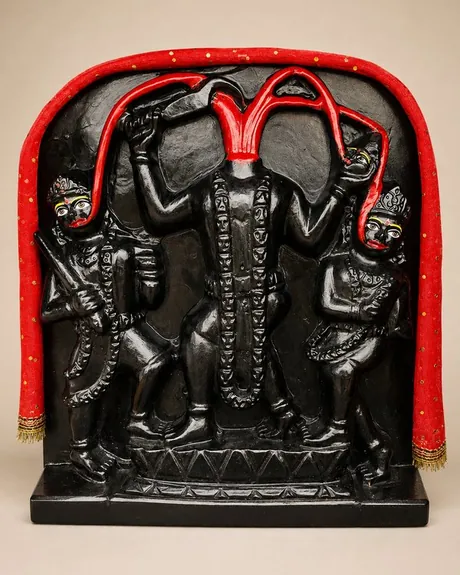
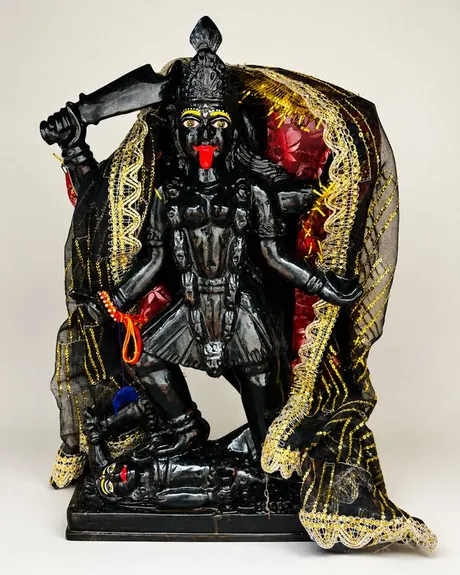
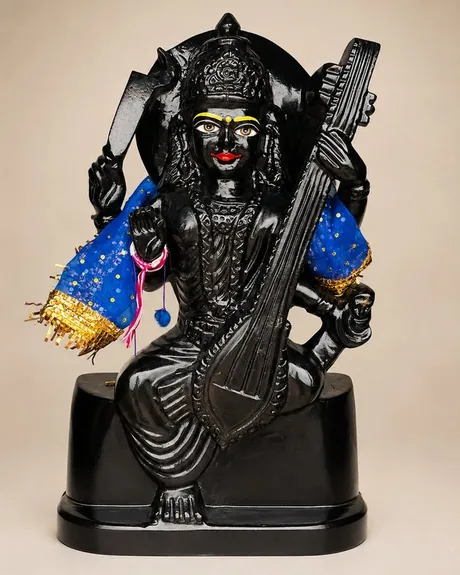
The Ten Mahavidyas
The ten Mahavidyas of Tantra stand enshrined around the main temple — divine embodiments of power, wisdom and fearlessness. For every seeker, this is sacred ground where spiritual practice finds its fulfilment.
Navratri
Maa perspires
Come to Bhairavi Dham during Navratri. Nothing needs doing — simply stand before Maa.
In the days of Navratri, drops of perspiration fall from the murti of Maa Bhairavi.
In the sanctum we wipe it away with a cloth — and a little while later it is there again. The whole murti stays wet with it.
There is no source of water there. There is no possibility of water dripping from above. Nothing is sprinkled, and there is no other cause.
And still Maa perspires.
Where else will you find a place as awake as this?
The worth of a single one of those drops is hard to grasp in a lifetime. Come once during Navratri — and see for yourself.
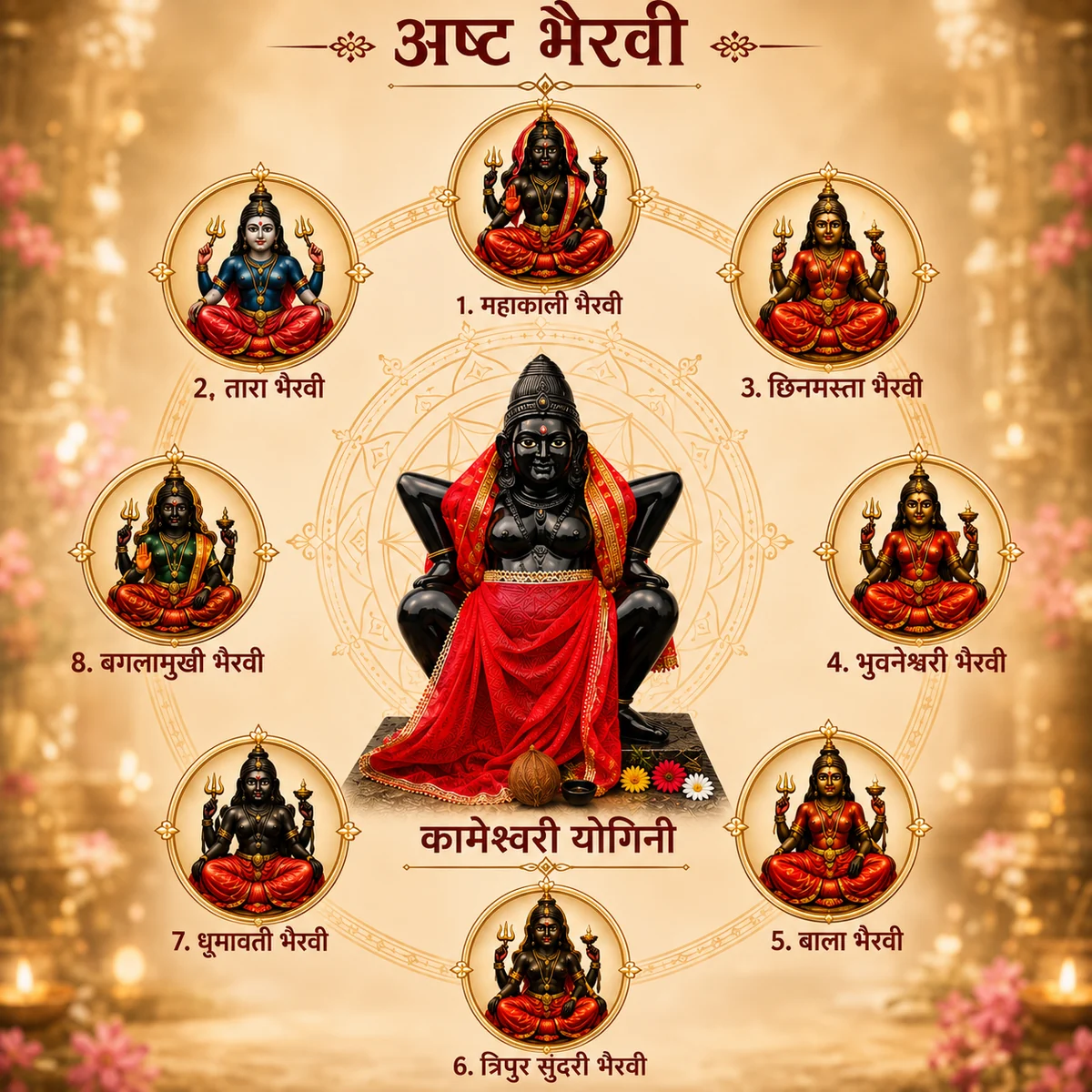
Asht Bhairavi
Kameshwari Yogini at the centre, and around her the eight Bhairavis — Mahakali, Tara, Chhinnamasta, Bhuvaneshwari, Bala, Tripura Sundari, Dhumavati and Baglamukhi Bhairavi.
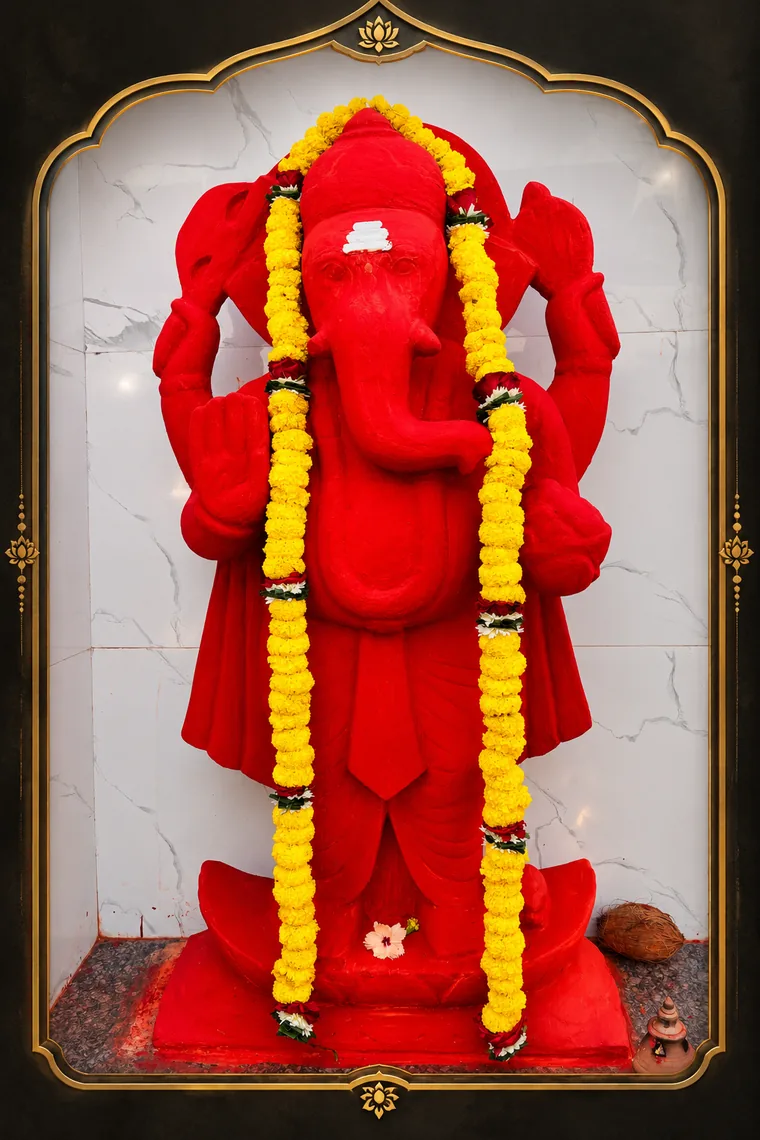
Veer Ganesh
WhereOutside the temple, to the north — facing north
There may hardly be a temple in Chhattisgarh where Veer Ganesh is enshrined in this form.
This place is a tantric kshetra, and in tantra Veer Ganesh holds a particular importance. He is the lord of the ganas, and he grants the seeker shakti, siddhi and energy.
Ganesh ji is in any case the first to be worshipped. Whatever the sadhana, whatever the puja, or whatever the work of carrying shakti forward — it is Ganesh ji who is remembered first.
Held within the Veer Ganesh of Bhairavi Dham
- Kaal Ganesh
- Aghor Ganesh
- Maha-aghor Ganesh
- Haridra Ganesh
Enshrined here facing north, it is from this very place that Veer Ganesh grants seekers shakti and siddhi.
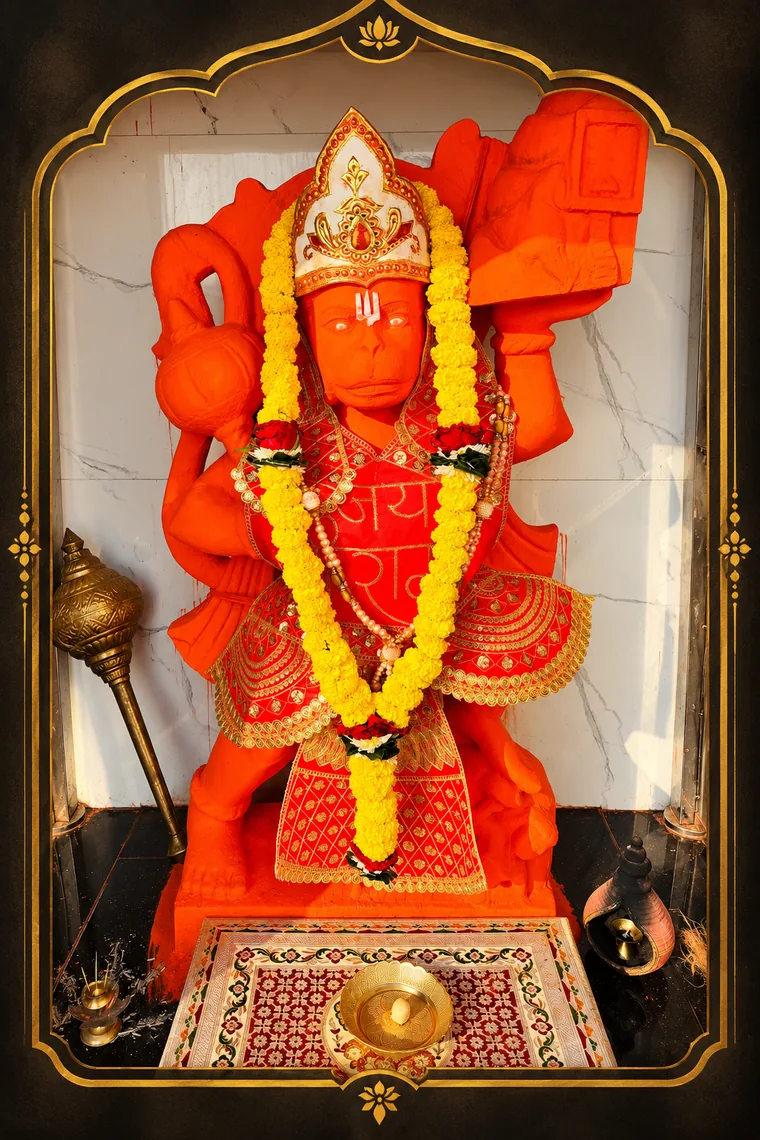
Hanuman ji
Hanuman ji helps in every wish. Whether illness or affliction, trouble of the mind or of the body, something done to you by another or any other obstacle — worship of Hanuman ji brings it all to peace. He protects the sadhak, and takes away fear and hindrance.
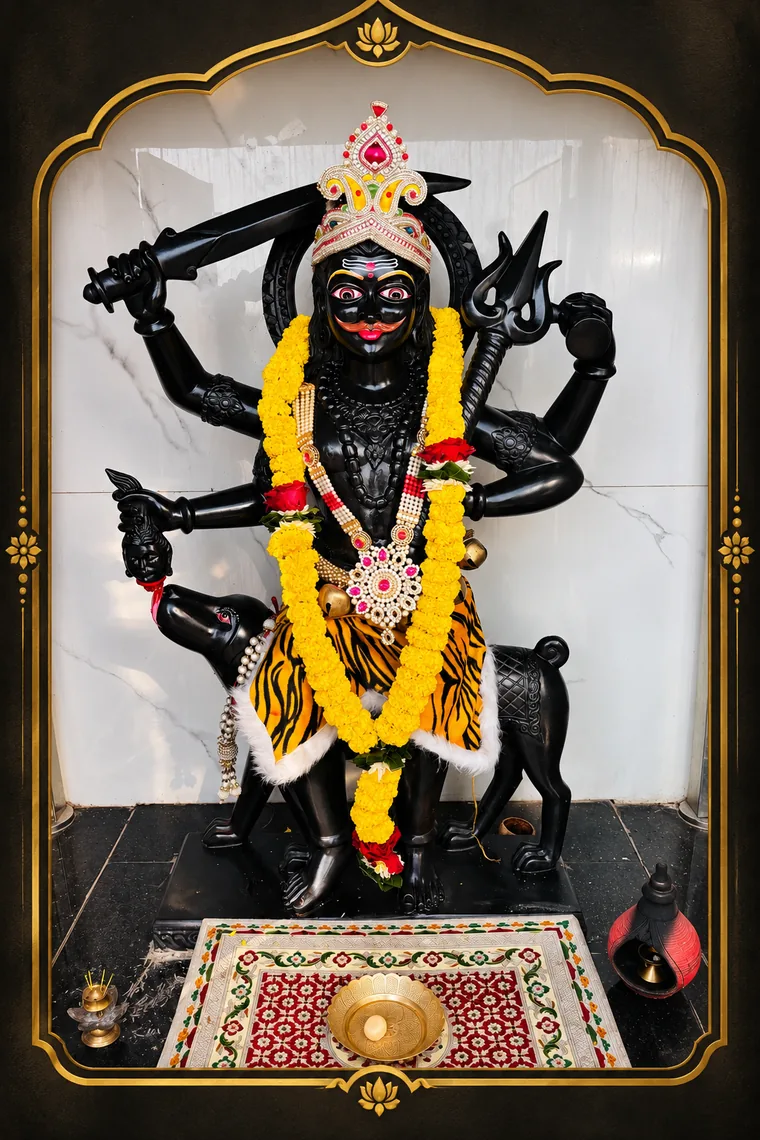
Kaal Bhairav Baba
Kaal Bhairav is the lord of time. Time, direction and sadhana — all three are under his authority. He walks with Mata ji and remains in her service. The shvan, the dog, is his vehicle.
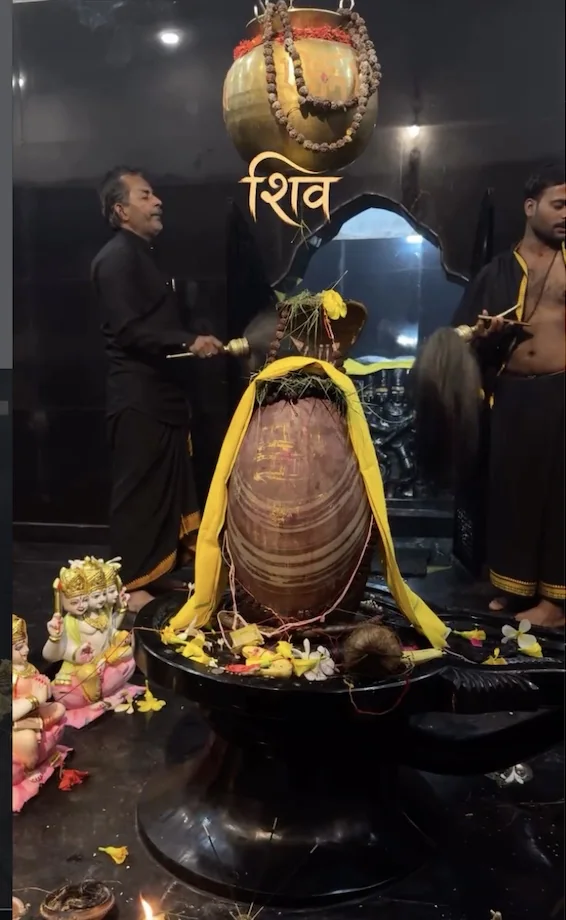
Shiva
The temple's Shivling, during abhishek.
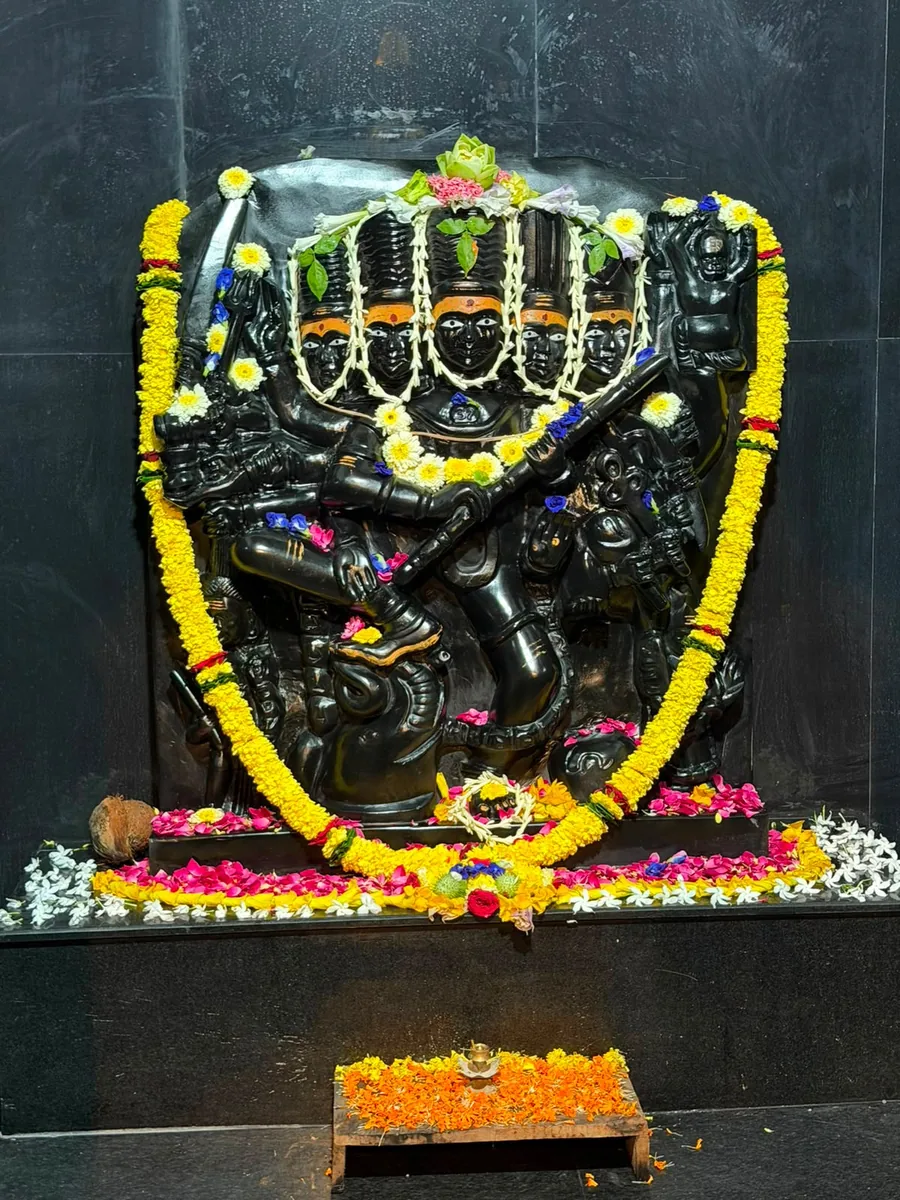
The five-faced guru form
At Bhairavi Dham the guru is enshrined in the panchmukhi — five-faced — form.
There may hardly be another murti like it anywhere in India; we have not seen one to this day.
It is by holding these five that we hold the Panch Parameshwar. Enshrined here in the form of the guru is Parameshthi Guru Mahesh.
The Asal Paath Tradition
Bhairavi Dham belongs to no sampradaya; it stands beyond sampradaya. Our tradition is the Asal Paath tradition.
The Asal Paath tradition holds ten principal paaths, among them Asal Paath, Tirpe Paath, Kanhe Paath, Makke Paath, Churiya Paath, Jogi Rao Paath and Banjari Paath. Beyond these there are many sub-paaths as well. All of them are worshipped at the dham in the traditional manner.
Enshrined alongside
Village goddesses
The local gram devis of Chhattisgarh, the original shakti of this land.
Chetrapal
Guardian of the boundaries of the region.
Saat Bahiniya
The seven shaktis of the folk tradition.
And together with them
64
Yoginis
64
Veers
56
Kalwa